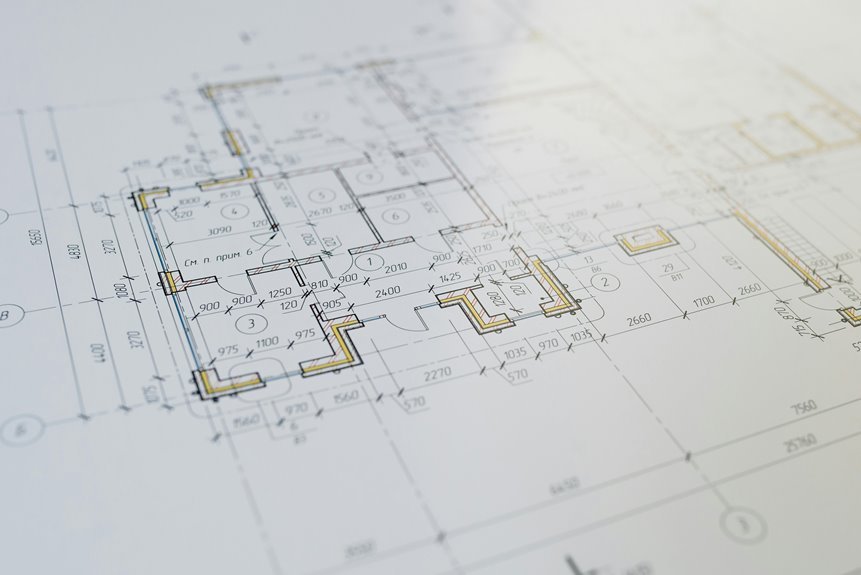
The HelioPrime Operational Blueprint outlines a cohesive framework for deploying Helioprime technology. It emphasizes mission clarity, governance, data stewardship, and interoperability. Real-time decision support and scalable data pipelines are central, with risk-aware controls guiding adaptive implementation. The plan covers staged rollouts, legacy integration, and autonomous capabilities under human oversight, supported by robust testing and rollback provisions. Its disciplined approach invites scrutiny of deployment strategies and accountability, inviting further examination of how each pillar informs secure, resilient operations.
What Is the Helioprime Operational Blueprint?
The Helioprime Operational Blueprint is a structured framework that defines the mission, capabilities, and procedural standards guiding the deployment and use of Helioprime technology. It outlines governance, safety, and interoperability requirements while enabling adaptive implementation.
Diffusion strategies ensure controlled dissemination of methods; data pipelines describe secure, scalable information flows. The document favors deliberate action, verifiable metrics, and freedom through transparent, disciplined practice.
Core Pillars for Efficiency, Scalability, and Resilience
This section delineates the core pillars that enable efficiency, scalability, and resilience within the Helioprime framework. It outlines data governance, risk mitigation, and system interoperability as foundational aims, ensuring disciplined data stewardship, proactive risk reduction, and seamless integration across components.
Emphasizing autonomy and clarity, the framework aligns governance and interoperability with concise, verifiable controls and measured, scalable resilience.
Real-Time Decision Support and Workflow Optimization
Real-time decision support and workflow optimization enable proactive, data-driven responses by integrating streaming inputs, rule-based logic, and lightweight predictive models.
The approach emphasizes real time decision capabilities, automated prioritization, and adaptive routing of tasks.
Structured dashboards translate insights into actions, maintaining minimal latency and clear accountability.
This framework supports flexible, autonomous operation while preserving human oversight and governance in complex environments.
Practical Rollout: From Legacy Systems to Next-Gen Sensors
Practical rollout from legacy systems to next‑gen sensors requires a staged, architecture‑driven approach that minimizes disruption while preserving data integrity. The process emphasizes deliberate legacy integration, modular upgrades, and interoperable interfaces.
Sensor fusion achieves coherent data interpretation by aligning formats and timelines.
Governance, testing, and rollback plans ensure responsive adaptation, while training and documentation support autonomous operation within a freedom‑valuing ecosystem.
Frequently Asked Questions
How Does Helioprime Ensure Data Privacy Across Sensors?
HelioPrime ensures data privacy by enforcing data isolation and robust access control, preventing cross-sensor leakage. It standardizes least-privilege principles, audit trails, and encrypted channels, enabling independent data processing while preserving freedom to explore insights without compromise.
What Are the Cost Implications for Small-Scale Deployments?
Cost modeling indicates modest initial investment for small-scale deployments, with gradual savings as Deployment scaling increases. Economies of scale influence hardware and bandwidth costs; ongoing maintenance remains stable, enabling flexible expansion while preserving budgetary clarity for freedom-oriented operators.
Can Legacy IT Teams Adapt Without Extensive Retraining?
Ironically, legacy IT teams can adapt with modest disruption, though true transformation requires deliberate planning. Legacy adoption benefits from training minimization, enabling steady continuity while structured mentorship reduces risk for those craving freedom and practicality.
How Is Uptime Guaranteed During Peak Operation Cycles?
Uptime guarantees are maintained through redundant sensor networks and automated failover during peak operation, ensuring continuous data collection. The approach prioritizes data privacy while balancing resilience, scalability, and transparent performance metrics for audiences seeking operational freedom.
What Future-Proofing Measures Prevent Vendor Lock-In?
Future proofing measures include designing with vendor neutral interfaces and a future proofing architecture to avoid lock-in. This approach preserves interoperability, supports modular upgrades, and sustains freedom to adopt diverse technologies without dependency on a single vendor.
Conclusion
The Helioprime Operational Blueprint concludes with a poised tension, where every decision echoes across systems and stakeholders. As real-time insights sharpen, dependencies tighten, and rollout steps converge, the path ahead remains meticulously guarded by governance, risk controls, and robust testing. Quietly, readiness builds beneath the surface—legacy and next-gen technologies aligning, operators watching for indicators, and a final, decisive moment approaching: a secure, scalable deployment ready to illuminate unseen frontiers. The suspense lingers, its outcome still unfolding.